
How Often Do Dogs Need a Bath?

Every dog has different needs. Some eat more than others. Some sleep more than others. And when it comes to bathing, factors like their breed, coat and lifestyle can determine how often you’ll need to get your dog into the tub. As dog owners, we all want our furry friends to look and smell their best. One way to achieve this is by giving them a bath regularly.
Factors to consider when bathing your dog
Bathing too frequently can strip their coat of natural oils and cause skin irritation, while not bathing them enough can lead to a build-up of dirt and bacteria. In this article, we will discuss how often dogs need a bath, taking into account various factors such as breed, coat type, and lifestyle.
1 – What is their coat like?
The texture and length of your dog’s coat can also influence how often they need a bath. Dogs with longer hair or those prone to matting, such as Shih Tzus or Maltese, may need more frequent baths to prevent tangles and keep their coat healthy. However, dogs with short hair or those that shed frequently, such as Boxers or Bulldogs, may need less frequent baths. This isn’t a matter of longer-haired dogs needing more attention. In fact, some hairless breeds need to be bathed once a week.
“Obviously, the more hair a dog has, the more work is involved, including the frequency of the bath,” dog groomer, author and pet expert Jorge Bendersky tells the American Kennel Club. “For dogs with medium-to-large coats, a bath could be needed from weekly to every 4-to-6 weeks, as long as the coat is properly maintained in-between baths.”
When dealing with dogs with thicker coats like Labradors or golden retrievers, remember that their coats provide a natural insulation, so, groom carefully!
2 – What is their health like?
If your dog has a skin condition or allergies, their bathing needs may be different from those of a healthy dog. In some cases, frequent bathing may be necessary to relieve itching and soothe irritated skin. However, in other cases, frequent bathing can exacerbate skin problems, and a medicated shampoo may be required.
Depending on their medical conditions, your vet — or your pet groomer — might suggest using a medicated shampoo on your dog. But even healthy dogs can benefit from a grooming regimen that includes things like nail trimming and ear cleaning. In the end, brushing, combing and conditioning their coat will be better for your dog’s health than giving them a bath.
If you or someone in your family suffers from pet allergies, giving your dog a bath can be as much for your benefit as your four-legged friend. Washing the dog once a week can help keep pet dander — which triggers allergies — under control.
3 – What is their lifestyle like?
A dog’s lifestyle can also impact how often they need a bath. Dogs that spend a lot of time outdoors, running through fields or swimming in lakes, may need to be bathed more frequently than dogs that live primarily indoors. Also, dogs that have contact with other animals or that have a habit of rolling in dirt may need more frequent baths.
If you have a dog with a short-haired coat, keeping them clean in between baths can be easier, just a matter of rubbing them down with a wet washcloth after they play outside.
But a dog that spends his day rolling through mud, splashing in the ocean or doing work such as keeping sheep in line is going down need more frequent baths than placid indoor dogs, no matter how long or short their fur is.
Perhaps the best rule of thumb for dog bathing comes from Bendersky: Wash your dog once they reach the point “when they are no longer huggable.”
Signs Your Dog Needs a Bath
While it is essential to bathe your dog regularly, it is also crucial to avoid over-bathing. Bathing your dog too frequently can strip their coat of natural oils, leading to dryness and irritation. Signs that your dog may need a bath include:
- A strong, unpleasant odor
- Dirt or debris in their coat
- Excessive shedding or matting
- Scratching or licking themselves more than usual
- Skin irritation or redness
If you notice any of these signs, it may be time for a bath.
Bathing Techniques and Tips
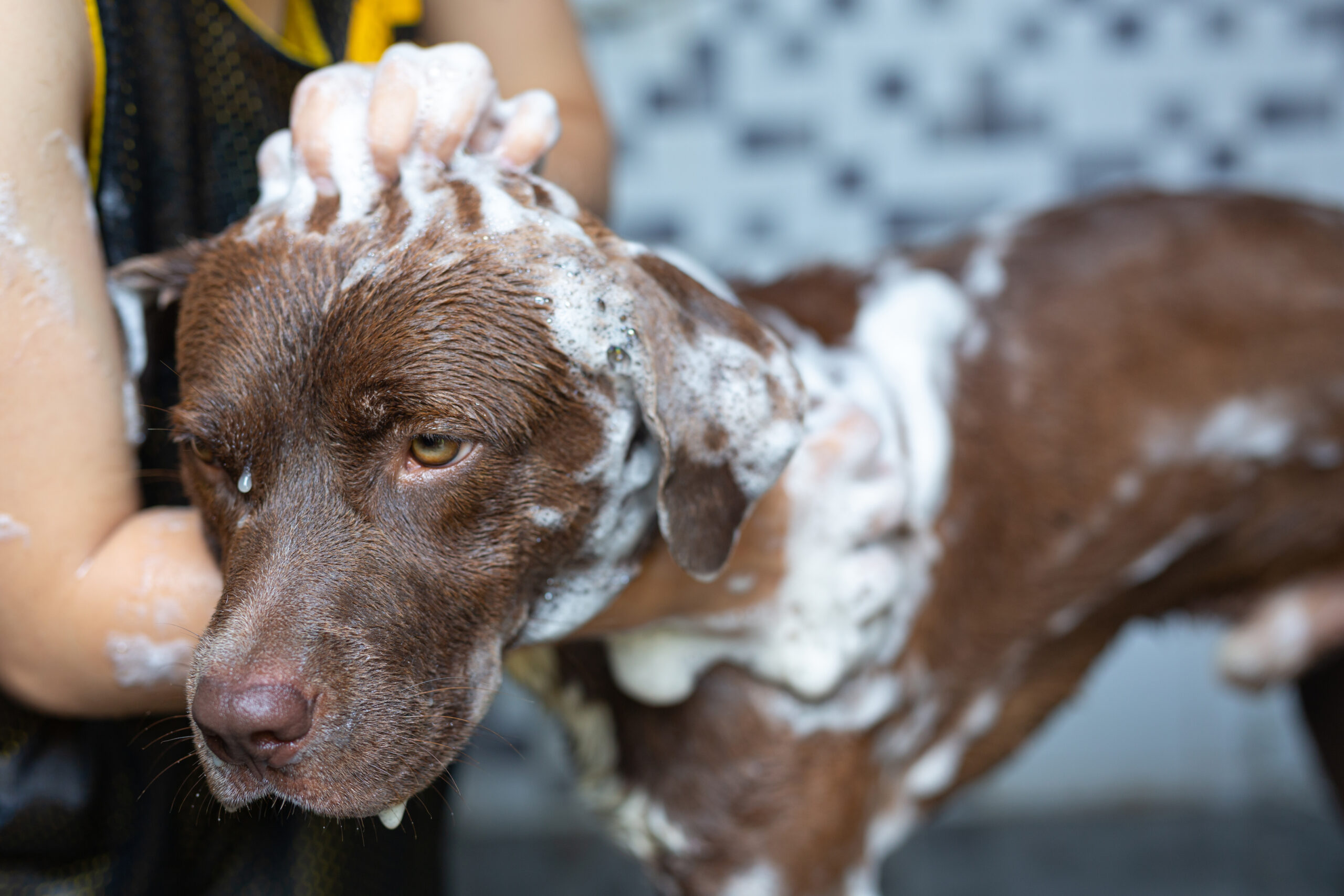
When it comes to bathing your there are some techniques and tips that can make the experience more comfortable for both you and your furry friend.
Keeping your dog calm during a bath
Some dogs enjoy bath times, but others find them unnerving. If your dog is in the latter category, remember these tips to keep them calm:
- Keep everything you’ll need in reach before you get started. Stepping away to grab a brush or bottle of shampoo gives your skittish dog the chance to bolt.
- Have their favorite treats on hand as a reward for good behavior.
- Put non-stick pads in the tub to prevent slipping and make sure the water is a comfortable temperature.
If you live somewhere warm — or it’s the summertime — wash your dog outdoors with the hose. Just make sure the water is a comfortable temperature and low pressure and don’t allow the dog to roll around when you’re done.
Choosing the Right Shampoo
It is essential to choose a shampoo that is specifically designed for dogs. Human shampoo can be too harsh for their skin and coat, and may even cause irritation or allergic reactions. Look for a shampoo that is pH balanced and free from harsh chemicals, such as parabens and sulfates. If your dog has a skin condition or allergies, consult with your veterinarian to find a medicated shampoo that is safe and effective.
Preparing for the Bath
To start bathing your dog, gather all the necessary supplies such as towels, a non-slip mat so both you and your dog wont slip, and a good brush. Gently and thoroughly brush your dogs coat to remove any loose fur or tangles. These tips will help prevent matting and make the bathing process more comfortable for you and your dog.
Bathing Your Dog
- To start, fill the tub with warm water and ensure that the water isn’t too hot or too cold.
- Second step is to wet your dogs coat thoroughly. Utilize a handheld showerhead or pitcher to avoid their eyes and ears.
- Remove all the shampoo by rinsing thoroughly.
- The areas under their legs and belly need extra attention. These areas tend to trap dirt and unwanted debris.
Drying Your Dog
Gently pat your dog after bathing and wrap them up in a towel. You can also use a hairdryer on the lowest heat setting to dry their coat. Avoid using a high heat setting, as this can be uncomfortable for your dog and can even burn their skin. Make sure your dog is completely dry before allowing them to go outside or rest on furniture.
Visit our Dog Spa in Middlesex County, MA
Are you interested in giving your dog an extra bit of pampering? The Dog Retreat and Spa is ready to help. Treat your furry friend to a day at our Dog Spa in Middlesex County, where they can enjoy services such as:
- Nail trimming
- Cut and blow dry
- Nail and teeth cleaning
- Furminator brushing
- Sanitary clipping
- Blueberry facials
- Massage
We look forward to helping your dog look and feel better. Contact us today to schedule an appointment at our Massachusetts dog spa.